

Some of our readers may have attended the As Good as Gold training seminar held this past September by then Education Coordinator, Stephanie DeCicco. The feedback from that seminar indicated some participants would be interested in learning more about how to deal with anxieties and fears in their dogs.
Hopefully readers who have recently adopted, are fostering, or have friends or family whose pet might be experiencing fears and anxieties will benefit from the insights below.

This article includes viewpoints of several dogs, in particular photos and comments by Abbie, whose parents are Pam and Joe. Abbie is an AGaG rescue

Recognizing What’s Occurring “Mom and dad, I’m really not naughty – – I’m afraid.”
To begin, the owner might wonder if their dog is misbehaving. Or could it be fearful reactions? How can you tell? Dogs who are fearful will do all they can to avoid the source of their fears. They might run, hide, cower, yawn, pace, lick their lips, growl or bark.
Providing a Safety Zone “I love my cozy spot!”
Trust develops between you and your dog once your dog feels safe–or at least more safe–in his/her environment. Providing a place where they like to go in which they feel safe and comfortable is important. A bed, a crate, a more secluded area with a blanket. A place where they can be more comfortable when strangers come to the house or when there are loud noises inside or out.
Training Method(s) “I like this cookie distraction plan!”
Positive reinforcement is man and dog’s best training tool! Fear-enforced training would certainly make the situation worse. Working with your pet on ways that will redirect their fears might include treats. Repetition of positive behavior methods strengthen the behavior being learned.
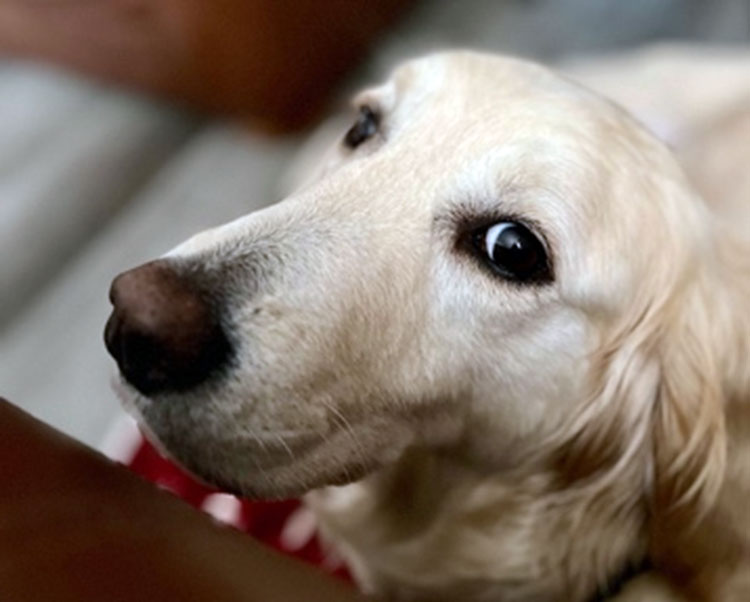 Don’t force your dog to face their fears “Thank goodness mom and dad are kind and understanding.”
It should be common knowledge not to throw people into the pool to learn to swim! They actually may become fearful of the water, if they weren’t before. Dogs won’t “get used to” the scary pots clanging in the kitchen if you force them to listen to them banging over and over. They actually might become more afraid, as with the toss into the pool. They might become immobilized and/or panic.
Mentor Dog “Thank goodness for my bestie, Tucker! I get my cues from him,” says Abbie.
A mentor dog in the family can often be helpful. The mentor dog can ease the fearful dog’s anxiety by showing them that certain situations are not threatening, and the fearful dog learns from observing the mentor’s reactions.
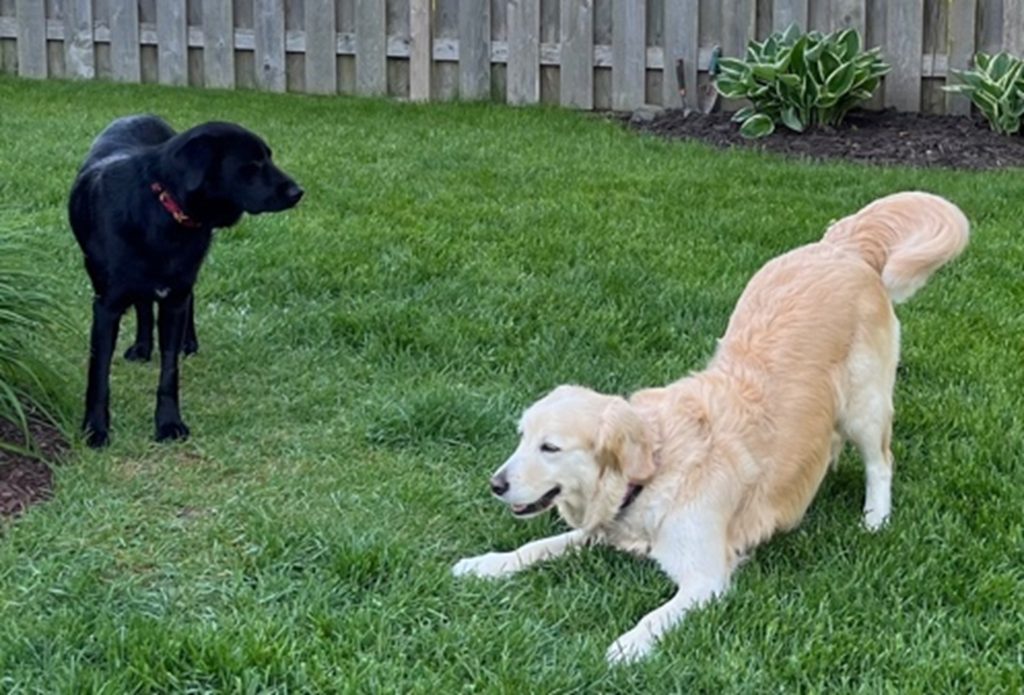
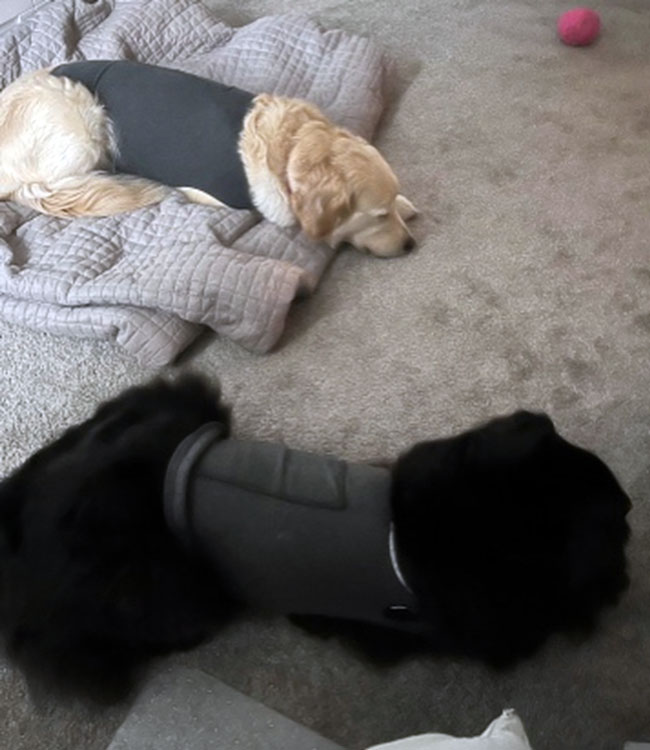
Abbie adds, “Mamie was my BFF when I first came to live with mom and dad. The very first time I went upstairs was when I heard a sound of thunder. I went into my mom’s office and laid near Mamie; she was not happy with the thunder either. Mom put calming vests on both of us and we settled down.(Mom thinks I had some setbacks after Mamie passed a few months later. It took me a while to recover, but Tucker is helping me out of my shell again!”
Seek professional help “Mom took me to the vet. He suggested a medicine to help me to be calm, and it’s helping.” My parents and I also meet with an animal behaviorist; they said she has good insights,” says Abbie.
Even a few lessons with a professional trainer might get owners through those first difficult steps. And your veterinarian could be a great resource. In fact, consulting with your veterinarian at the beginning is advisable just to confirm there is not an underlying medical issue that could be contributing to the fear. Your vet also might have training contacts or could suggest a veterinary behaviorist for those difficult cases.
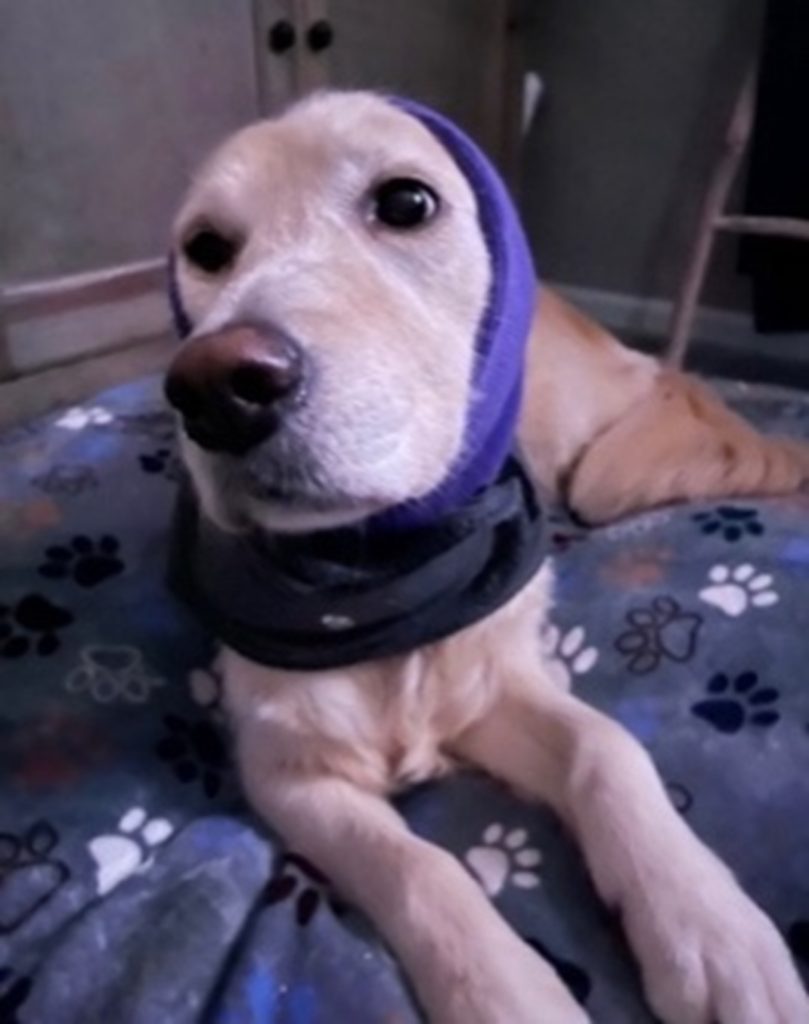
Additional Tools, suggested by Abbie
Soothing melodies. “I prefer classical,” says Abbie. These headphones for pets help her make it through storms.
Happy Hoodie. The Happy Hoodie helps when pets are afraid of the blow drying during grooming. Pam says the hoodie helps during storms too.
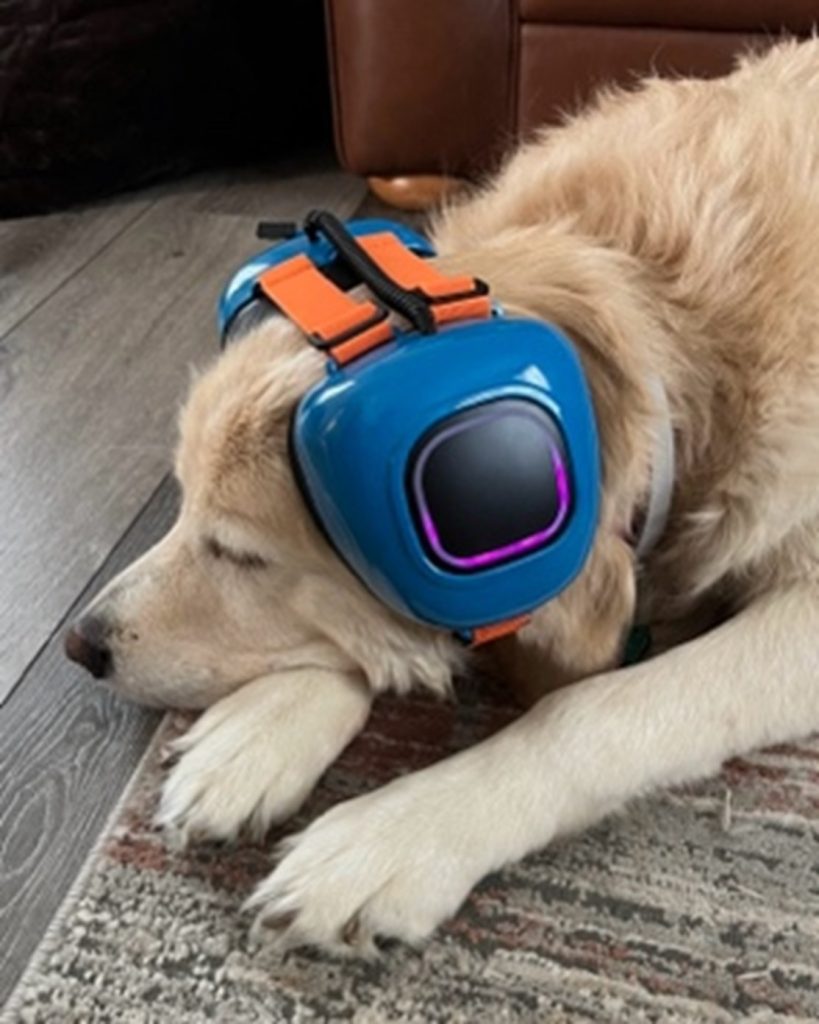
One Step at a Time “I enjoy the loving attention I’m getting along the way!”
Working together with your dog in a positive manner in order to calm fears is not a race. Owners say that they sometimes have realized gradual changes, and when they do, it’s a win! As time goes on, and you’ve seen some great progress, just realize some pets may continue to have fears. Your pet could still be a happy and much-loved family member despite a small, lingering fear.
Abbie confided, “Wanna know what I did yesterday? Well, I settled onto what is Tucker’s normal spot at the top of the steps. It was kinda cool being the one looking down on him for a change! Of course, he’s still my best buddy, but I couldn’t help but smile!”
Pam and Joe, “Abbie was and still can be fearful. We have learned so much from her. Abbie is Abbie and we are so proud of how far she has come. We love her completely.”
To access the complete article, Eight Tips to Help Fearful Dogs Feel Safe, please use the link below: Companion Animal Psychology.
References
Animal Humane Society, “Help Your Anxious or Fearful Dog Gain Confidence.”
https://www.animalhumanesociety.org/resource/help-your-anxious-or-fearful-dog-gain-confidence
Zazie Todd, PhD., “Companion Animal Psychology.”
https://www.companionanimalpsychology.com/2018/08/eight-tips-to-help-fearful-dogs-feel.html
Pam and Joe, As Good as Gold members and adopters.
Recent Posts
Cooperative Care: Building Trust Through Everyday Care
For many rescue dogs, routine procedures such as nail [...]
Unwanted Barking: Don’t Correct – Re-Direct!
The trainers at A Sound Beginning use a training [...]
Cooperative Care: Building Trust Through Everyday Care
For many rescue dogs, routine procedures such as nail [...]
Unwanted Barking: Don’t Correct – Re-Direct!
The trainers at A Sound Beginning use a training [...]
Cooperative Care: Building Trust Through Everyday Care
For many rescue dogs, routine procedures such as nail [...]
Unwanted Barking: Don’t Correct – Re-Direct!
The trainers at A Sound Beginning use a training [...]
How Schedule Changes Affect Pets
Pets, like humans, thrive on routine. When these patterns [...]